Keeping Your Business Running During Painting
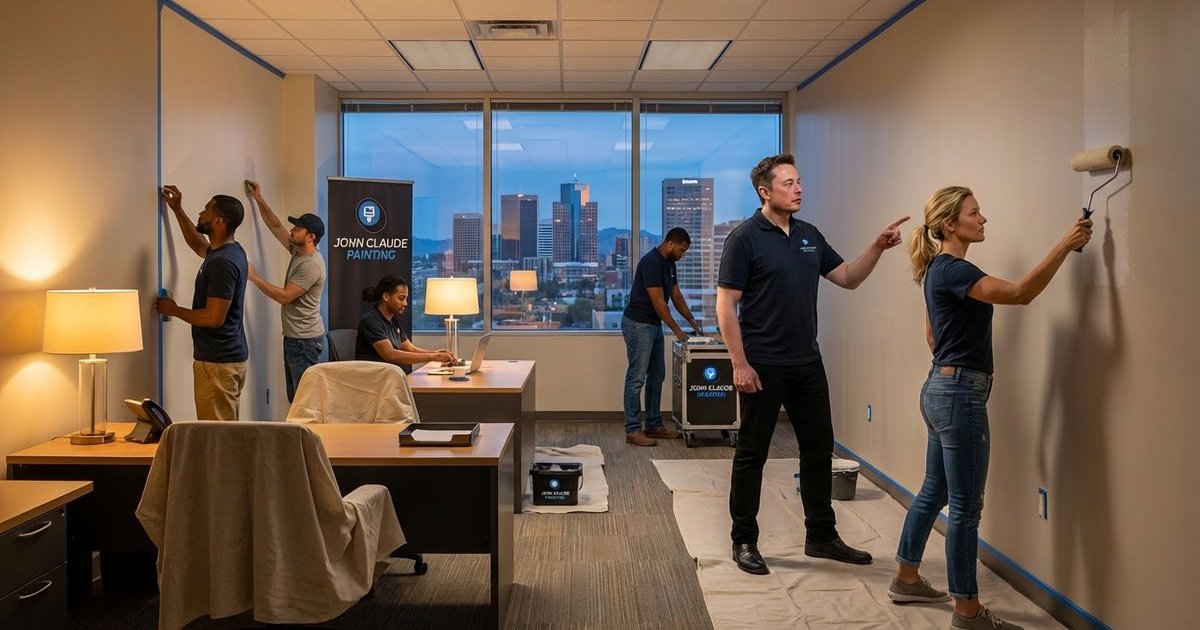
Commercial painting presents a unique challenge: your business needs to continue operating while we transform your space. Unlike residential projects where homeowners can simply leave, commercial painting requires careful coordination to minimize disruption to employees, customers, and operations.
At John Claude Painting, we’ve developed commercial painting strategies that allow Phoenix businesses to maintain normal operations while getting the fresh look they need.
Understanding the Challenges
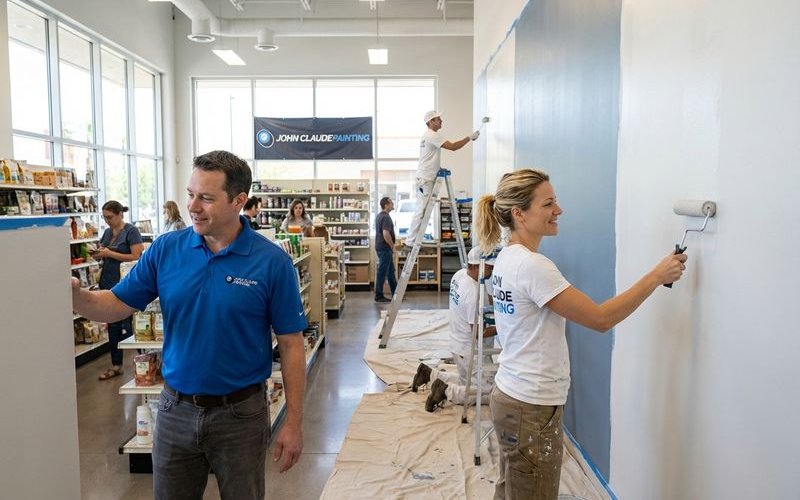
Commercial painting involves considerations that don’t apply to homes.
Business Operation Factors
Customer experience
- First impressions: A 2024 survey indicates that 95% of customers judge a business’s competence by its physical appearance.
- Odor control: Strong fumes can drive customers away immediately.
- Safety protocols: Wet floors and ladders must be completely isolated from public access.
- Professionalism: Your brand image cannot pause during renovations.
Employee productivity
- Focus retention: Studies from 2025 show that office noise can reduce employee productivity by up to 20% on tasks requiring deep concentration.
- Recovery time: It takes an average of 23 minutes for an employee to fully refocus after a significant interruption.
- Air quality: OSHA standards require specific ventilation protocols to maintain indoor air quality (IAQ) during painting.
- Space usage: Temporary displacement can disrupt team collaboration.
Operational continuity
- Revenue protection: Closing for even two days can cost more in lost sales than the entire painting project.
- Service uptime: Essential services like server rooms or medical intake areas often have zero tolerance for downtime.
- Deadline adherence: Your business goals don’t stop just because we are painting the walls.
Physical Challenges
Larger spaces
- Zoning logistics: Warehouses often require moving 20-foot shelving units rather than just furniture.
- Phased completion: We often have to paint a 50,000 sq. ft. facility in five separate 10,000 sq. ft. blocks.
- Height requirements: Lifts and scaffolding require specific clearance zones that impact floor layouts.
- Staging complexity: Equipment storage must not block fire exits or daily workflow paths.
Working hours
- Noise ordinances: In Phoenix, commercial work within 500 feet of a residence is generally restricted between 10:00 PM and 5:00 AM.
- Access limits: Security protocols often restrict contractor access during non-business hours.
- Seasonal heat: Arizona summers mean exterior work must often start at 4:00 AM or 5:00 AM to ensure paint cures properly.
- Timeline pressures: Night shifts shorten the calendar duration but increase coordination needs.
Scheduling Strategies
Several approaches minimize business impact.
After-Hours Painting
How it works:
- Our crew arrives immediately after your business closes for the day.
- We prep, paint, and clean a specific section through the night.
- The area is reset and odor-free before your staff arrives the next morning.
- This cycle repeats until the project is finished.
Best for:
- Retail stores with defined closing times.
- Corporate offices with 9-to-5 schedules.
- Medical clinics that close overnight.
- Banks and professional service firms.
Considerations:
- Cost: Night shift labor typically carries a 10% to 20% premium due to higher wage requirements.
- Security: You will need to arrange for key access or security personnel presence.
- Lighting: Your facility must have adequate lighting for us to achieve a high-quality finish at night.
- Ordinances: We must verify local noise codes if your building borders a residential zone in Chandler or Gilbert.
Weekend Projects
How it works:
- We deploy a larger “blitz” crew starting Friday evening.
- Work continues intensively through Saturday and Sunday.
- The goal is to complete large common areas or lobbies in a single 48-hour window.
- Monday morning operations resume with zero evidence of construction.
Best for:
- Lobbies and reception areas.
- High-traffic hallways.
- Schools and educational facilities.
- Government buildings.
Considerations:
- Manpower: Requires a larger crew size to ensure completion before Monday.
- Availability: These slots fill up quickly and often require booking weeks in advance.
- HVAC usage: Air conditioning must run all weekend to aid drying and odor dissipation.
- Access: Alarm codes and gate keys must be coordinated by Friday afternoon.
Phased Approach
How it works:
- We divide your floor plan into distinct “zones” (e.g., North Wing, Warehouse A).
- Barriers are erected to completely seal off the active work zone.
- We complete one zone fully before moving to the next.
- Your staff relocates temporarily to other parts of the building.
Best for:
- 24-hour facilities like hospitals or call centers.
- Large warehouses with high inventory turnover.
- Manufacturing plants that cannot shut down lines.
- Multi-building office campuses.
Considerations:
- Duration: This method extends the total project timeline by 15-20% due to repeated setup and breakdown.
- Space: You need “swing space” to move employees or inventory into.
- Consistency: We use precise color matching to ensure the first zone matches the last zone perfectly.
- Billing: Phased billing is often easier to manage with this approach.
Seasonal Timing
How it works:
- We analyze your business’s annual revenue cycle to find the lowest traffic weeks.
- Retailers often schedule work in January or February after the holiday rush.
- Schools invariably schedule major work during summer or winter break.
- Hotels schedule floor renovations during their off-peak occupancy months.
Best for:
- Hospitality and tourism businesses.
- Educational institutions.
- Retailers with strong seasonal peaks.
- Tax/Accounting firms (May through December).
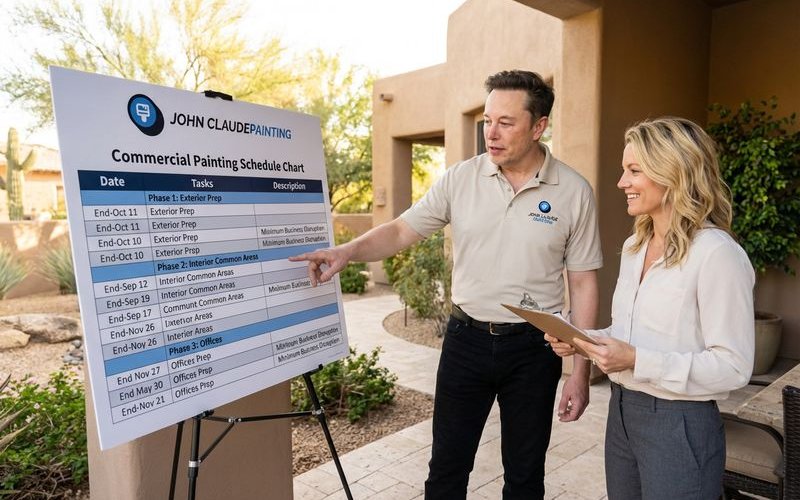
Comparison of Scheduling Options
| Strategy | Cost Impact | Disruption Level | Project Speed | Best Use Case |
|---|---|---|---|---|
| After-Hours | High (+15-20%) | Lowest | Fast | Offices & Retail |
| Weekend Blitz | Medium (+10-15%) | Low | Fastest | Lobbies & Hallways |
| Phased Plan | Low (Standard) | Medium | Slower | 24/7 Facilities |
| Seasonal | Low (Standard) | Low | Standard | Schools & Hotels |
Specific Business Type Strategies
Different businesses need different approaches.
Retail Stores
Key concerns:
- Merchandise protection is the top priority.
- Customers will not enter a store that smells like chemicals.
- Aisle widths must remain compliant with ADA regulations during work.
- Dust control is critical for electronics or clothing retailers.
Our approach:
- We use 4-mil heavy plastic to create dust-proof barriers over shelving.
- High-traffic entrances are painted exclusively during closed hours.
- Fast-drying acrylics allow shelves to be restocked the next morning.
- We prioritize the storefront to maintain “open for business” appeal.
Restaurants
Key concerns:
- Health department regulations regarding food safety are strict.
- Kitchen equipment cannot be exposed to dust or paint splatter.
- Dining rooms must be odor-free before the first lunch seating.
- Exhaust hoods often require specialized high-heat coatings.
Our approach:
- We exclusively schedule kitchen painting for overnight hours or closed days.
- Zero-VOC products are non-negotiable for dining areas.
- All food preparation surfaces are double-covered and sealed.
- We use scrubbable epoxy paints in kitchens for maximum hygiene.
Offices
Key concerns:
- Cubicle furniture is difficult and costly to move.
- Sensitive electronics and servers need protection from dust.
- Confidential documents must remain secure.
- Meeting room availability is often critical.
Our approach:
- We use “lift-and-paint” jacks to paint under cubicle partitions without dismantling them.
- Computer monitors are bagged and tagged before any sanding begins.
- Background checks are standard for all our crew members working in secure areas.
- We post a daily schedule so employees know exactly which rooms are offline.
Medical Facilities
Key concerns:
- Patient health makes indoor air quality (IAQ) the single biggest factor.
- HIPAA regulations restrict where crews can go and who they interact with.
- Sanitization protocols must be maintained throughout the process.
- Emergency equipment access can never be blocked.
Our approach:
- We utilize negative air pressure machines to prevent fumes from escaping the work zone.
- Anti-microbial paints like Sherwin-Williams Paint Shield® are often recommended.
- Our crews are trained on infection control risk assessment (ICRA) protocols.
- Work is often broken down into single-room increments.
Warehouses/Industrial
Key concerns:
- Safety lines and floor markings must remain visible.
- High ceilings require scissor lifts that block forklift lanes.
- Machinery may be sensitive to overspray.
- Production quotas cannot be missed.
Our approach:
- We apply “dryfall” paint on ceilings so overspray turns to dust before hitting the floor.
- Work is coordinated around shift changes or scheduled downtimes.
- Industrial enamels are used for durability against heavy machinery impact.
- We paint safety aisle markings last to ensure immediate visibility.
Preparation for Commercial Projects
What you can do to help minimize disruption.
Before We Arrive
Clear the work area:
- Move small items and electronics to a secure central location.
- Clear all personal items from desktops and cubicle shelves.
- Remove wall hangings, diplomas, and whiteboards.
- Unlock any secured rooms or closets scheduled for painting.
Communicate with staff:
- Send a company-wide email one week before the start date.
- Designate a single internal “Project Champion” to interface with our foreman.
- Inform employees about any temporary parking or entrance changes.
- Clarify that personal items left behind will be covered but not moved.
Plan alternatives:
- Book off-site conference rooms if meeting spaces are being painted.
- Enable remote work options for employees in the active zone.
- Post signage at entrances informing customers of the improvements.
- Update your Google Business profile if hours will temporarily change.
During the Project
Daily coordination:
- Review the “look-ahead” schedule with our foreman every morning.
- Check that all security alarms are functioning at the end of the shift.
- Report any odors or noise complaints immediately so we can adjust.
- Verify that access badges or keys are working for the night crew.
Maintain access:
- Prop open interior doors in active zones to improve air circulation.
- Ensure the loading dock is clear for our equipment delivery.
- Provide a specific parking area for our work trucks and vans.
- Keep a clear path to the utility sink and restrooms for the crew.
Low-Disruption Products
Product choices affect business impact.
Low-VOC and Zero-VOC Paints
Benefits:
- Rapid Occupancy: Staff can often return to the room within hours, not days.
- Compliance: Meets LEED certification and strict corporate environmental policies.
- Health: Reduces the risk of headaches or respiratory irritation for sensitive staff.
- Flexibility: Allows for painting in occupied buildings without evacuating floors.
Considerations:
- Cost: Premium Zero-VOC lines may cost $5-$10 more per gallon.
- Touch-ups: Some zero-VOC formulas blend differently than standard paints during repairs.
- Application: They may dry faster, requiring a skilled hand to avoid lap marks.
- Durability: Modern formulas like ProMar® 200 Zero VOC offer durability equal to traditional latex.
Quick-Dry Products
Benefits:
- Speed: Dry-to-touch times of 1 hour allow for two coats in a single shift.
- Efficiency: Doors and frames can be closed sooner without sticking.
- Traffic: Hallways can be reopened to foot traffic almost immediately.
- Hardness: Catalyzed products cure to a hard finish faster than standard enamels.
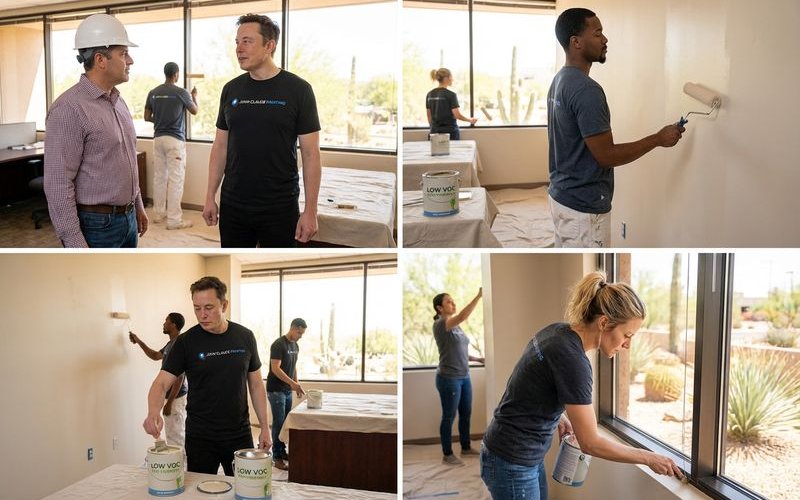
Our recommendation: We primarily use Sherwin-Williams ProMar® 200 Zero VOC for commercial interiors. It provides the professional durability you need with the low odor profile that keeps your tenants and employees happy.
Communication Is Key
Successful commercial projects require clear communication.
Before the Project
- Walkthrough: We conduct a pre-construction walk to identify every outlet, switch, and sprinkler head.
- Schedule: You receive a day-by-day Gantt chart showing exactly where we will be.
- Logistics: We agree on dumpster locations, restroom usage, and break areas.
- Contacts: You get the direct cell phone number of the on-site foreman.
- Expectations: We define exactly what “clean” means for the final handover.
During the Project
- Updates: We provide a brief daily email summary of completed areas.
- Reporting: Any hidden damage (like water rot) is photographed and reported immediately.
- Adjustments: If a meeting runs late, we shift our focus to a different zone.
- Safety: We post “Wet Paint” and “Caution” signage prominently in all active areas.
After Each Phase
- Inspection: We walk the specific zone with you to get sign-off before moving on.
- Cleanup: All masking tape and plastic is removed daily, not left for the end.
- Restoration: Furniture is moved back to its original position.
- Feedback: We ask for immediate input to ensure the next phase goes even smoother.
Cost Considerations
Commercial scheduling affects pricing.
Factors Affecting Cost
After-hours work:
- Labor Rates: Night and weekend shifts typically incur a 15-20% labor surcharge.
- Supervision: Additional project management time is needed to coordinate key handoffs.
- Utilities: Running HVAC and lighting systems overnight increases your utility usage.
- Access: Security guard staffing may be an additional line item for your budget.
Extended timeline:
- Mobilization: Setting up and breaking down daily for a phased project adds labor hours.
- Equipment: Renting lifts for four weeks instead of one week increases rental costs.
- Storage: Secure on-site storage containers may be required for long-term projects.
- Inflation: Materials for multi-month projects may be subject to price adjustments.
Rush requirements:
- Crew Size: Doubling the crew size to meet a deadline requires pulling painters from other jobs.
- Overtime: Paying time-and-a-half for 12-hour days significantly increases the labor budget.
- Expediting: Rush shipping for specialty paints or custom colors adds freight costs.
- Efficiency: Overcrowding a workspace can actually lower per-person productivity.
Balancing Cost and Disruption
We help you find the right balance:
- Hybrid Schedules: We can paint non-critical back rooms during the day to save money, and lobbies at night.
- ROI Analysis: We help you calculate the cost of closing vs. the cost of night premiums.
- Volume Discounts: Larger continuous phases are cheaper than many small, broken-up visits.
- Fixed Pricing: Our proposals clearly itemize the cost difference for schedule options so you can decide.
Our Commercial Process
How we minimize disruption.
1. Initial Assessment
- We walk the entire facility to map out traffic flow and critical zones.
- Our team identifies constraints like security doors or heavy machinery.
- We discuss your peak hours and “blackout” dates for specific areas.
- You share your priorities regarding noise, odor, and visual impact.
2. Custom Schedule
- We develop a phasing plan that aligns with your operational calendar.
- The schedule includes specific buffer days for weather or unforeseen repairs.
- We build in flexibility to pause work if your business needs an emergency meeting.
- You approve the final timeline before a single can of paint is opened.
3. Execute with Care
- We stick to the agreed schedule to prevent cascading delays.
- Our foreman communicates constantly to ensure no surprises for your staff.
- We solve problems quickly, often fixing minor drywall issues on the spot.
- Quality checks are performed continuously, not just at the end.
4. Clean Finish
- We return areas promptly so you can resume revenue-generating activities.
- The site is left broom-clean and vacuumed every single day.
- A final walkthrough ensures every detail meets your standards.
- We address any concerns immediately under our warranty.
Ready to Plan Your Commercial Project?
At John Claude Painting, we understand that your business can’t just stop. We work with you to develop a painting schedule that meets your needs while minimizing impact on your operations.
Call us at 602-572-1234 or contact us online to discuss your commercial painting project. We serve Phoenix, Chandler, Gilbert, Mesa, Tempe, Scottsdale, and the East Valley.
Every commercial project is unique. Contact us for a custom proposal that addresses your specific operational requirements and timeline constraints.