Understanding Interior Paint Longevity
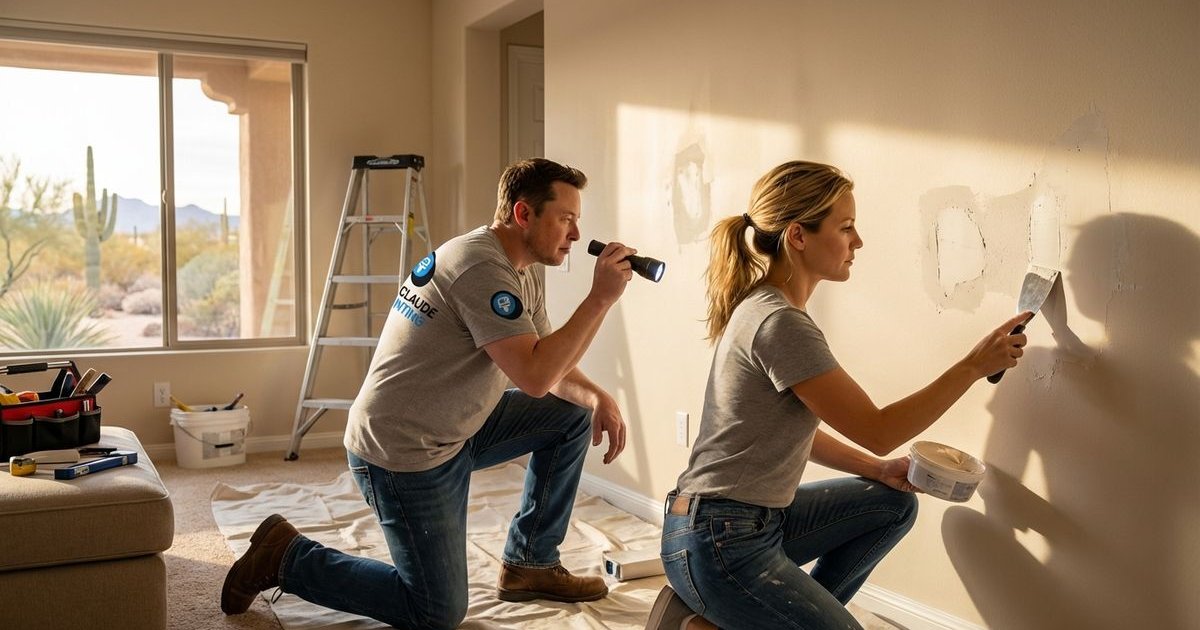
How often should you repaint your home’s interior? We hear this question constantly from homeowners in Chandler and Gilbert. Paint life varies, but the timeline typically ranges from 3 to 10 years depending on the quality of the original job and the room’s exposure to our desert environment.
At John Claude Painting, our interior painting team sees firsthand how Arizona’s unique conditions impact interior walls. Fine red dust from haboobs infiltrates window seals, and the intense UV rays beating on west-facing windows can fade wall colors prematurely.
You likely have “builder grade” paint if your home is a newer build in an area like Ahwatukee. This standard coating—often a product like Sherwin-Williams ProMar 200 or similar—is designed for speed, not longevity, and typically needs a refresh after just 3 to 5 years.
General Repainting Guidelines by Room
Different spaces in your home age at different rates due to traffic and exposure.
High-Traffic Areas (3-5 Years)
These rooms face the most physical contact and environmental stress.
- Hallways: Narrow spaces lead to shoulder rubs and scuffs, especially with textured walls like orange peel or knockdown.
- Entryways: We see heavy wear here from bags, keys, and the tracking in of abrasive desert dust.
- Kitchens: Cooking grease and steam degrade paint, while frequent scrubbing wears down lower-sheen finishes.
- Kids’ Rooms: Activity levels here often lead to chipped paint and difficult-to-clean stains.
- Bathrooms: Humidity spikes from showers can soften paint over time, making it susceptible to peeling or mildew.
Moderate-Traffic Areas (5-7 Years)
These spaces are used daily but generally avoid heavy impacts.
- Living Rooms: Blinds and solar screens often protect these walls, but UV fading is still a risk near windows.
- Family Rooms: Furniture placement often protects lower walls, though corners still see wear.
- Dining Rooms: Chair rails often take the brunt of the damage, preserving the main wall surfaces.
- Home Offices: Unless you have a rolling chair hitting the wall, these rooms stay pristine for longer.
Low-Traffic Areas (7-10 Years)
You can often stretch the timeline significantly in these preserved spaces.
- Adult Bedrooms: Stable temperatures and minimal contact allow high-quality paint to last over a decade.
- Guest Rooms: These rooms often look brand new even after 8 years due to infrequent use.
- Formal Living Rooms: Since these are rarely used in modern layouts, dust accumulation is the only real enemy.
Signs Your Interior Needs Repainting
Waiting for paint to peel off the walls often means you have waited too long.
Visual Indicators
Uneven Fading We frequently see “picture framing” where you remove a painting and find a dark square behind it. This is due to UV exposure bleaching the exposed wall, particularly in rooms with south or west-facing windows.
Texture Shadowing Dust settles on the ridges of skip trowel or knockdown textures common in Phoenix homes. If vacuuming doesn’t restore the brightness, the dirt may be embedded in the paint’s pores.
Sheen Failure Scrubbable paints eventually lose their gloss. If you wipe a wall and the spot looks dull or “burnished” afterwards, the protective finish is gone.
Functional Warning Signs
Loss of Washability High-quality acrylics should release dirt easily. When stains start soaking in rather than wiping off, your paint has become porous and is no longer protecting the drywall.
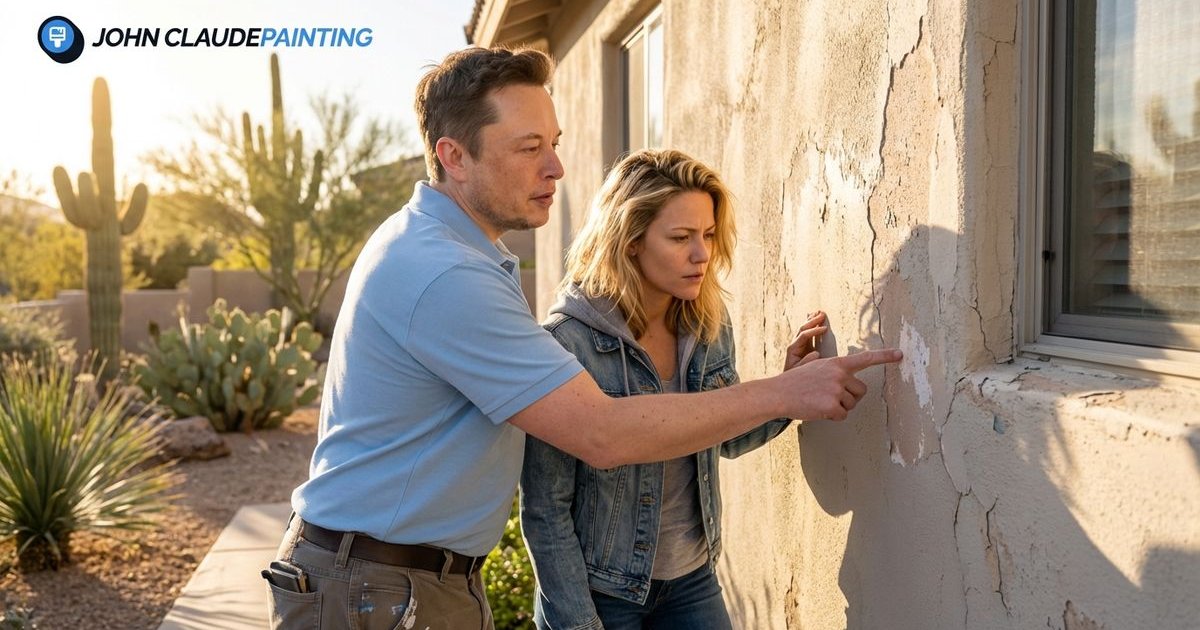
Cracking at Seams Our dry heat causes homes to shift and settle. You might notice hairline cracks above door frames or where the wall meets the ceiling, indicating the paint’s elasticity has failed.
Mold in Wet Zones Green or black spots in bathrooms often mean the moisture-resistant additives in the paint have expired.
Factors That Affect Paint Longevity
The lifespan of your paint job is not random; it is calculated based on specific variables.
Paint Quality: The “Solids” Difference
Cheap paint is mostly water and solvents that evaporate, leaving a thin layer of pigment behind. Premium paints have a higher volume of “solids” (binders and pigments) that remain on the wall, creating a thicker, more durable armor.
| Paint Grade | Typical Example | Lifespan | Best Use |
|---|---|---|---|
| Builder Grade | SW ProMar 200 / 400 | 3-5 Years | Flips, rentals, ceilings |
| Mid-Range | SW SuperPaint / DE Versaflat | 5-7 Years | Bedrooms, living areas |
| Premium | SW Duration / DE Evershield | 10+ Years | Kitchens, baths, hallways |
Application Technique
The method of application changes the density of the coating.
- Spraying vs. Rolling: Spraying looks smooth but can be thin if not “back-rolled” to push the paint into the texture.
- Primer Use: Painting over a dark color without a dedicated primer often leads to color bleed-through years later.
- Clean Surfaces: Painting over dusty walls (common in renovations) prevents proper adhesion, leading to early peeling.
Environmental Stressors
Phoenix homes face specific challenges that standard advice ignores.
- Monsoon Humidity: The swing from 5% humidity in June to 40% in August stresses paint elasticity.
- AC Usage: Running AC 24/7 creates a dry interior that can make cheap caulking brittle and prone to cracking.
- UV Index: Sunlight here is intense enough to break down the binders in paint, causing it to “chalk” or turn to dust.
Extending Your Paint Life
You can add years to your investment with the right maintenance routine.
Clean Textured Walls Correctly
Our textured walls hold more dust than smooth drywall.
- Vacuum First: Use a soft brush attachment to remove loose red dust from the texture ridges.
- Don’t Wet Immediately: Wiping a dusty wall with a wet rag creates mud that stains the paint.
- Use Microfiber: Sponges can shred on rough skip-trowel textures; microfiber cloths glide over them safely.
Protect Against Burnishing
Flat paint (matte finish) effectively hides drywall imperfections but is easily damaged by scrubbing.
- Avoid Magic Erasers: These abrasive pads work like sandpaper and will remove the paint finish along with the stain.
- Blot, Don’t Rub: Gently dab stains with a damp cloth to avoid creating a shiny spot on the wall.
- Upgrade Finishes: Use satin or eggshell finishes in hallways to make future cleaning safer.
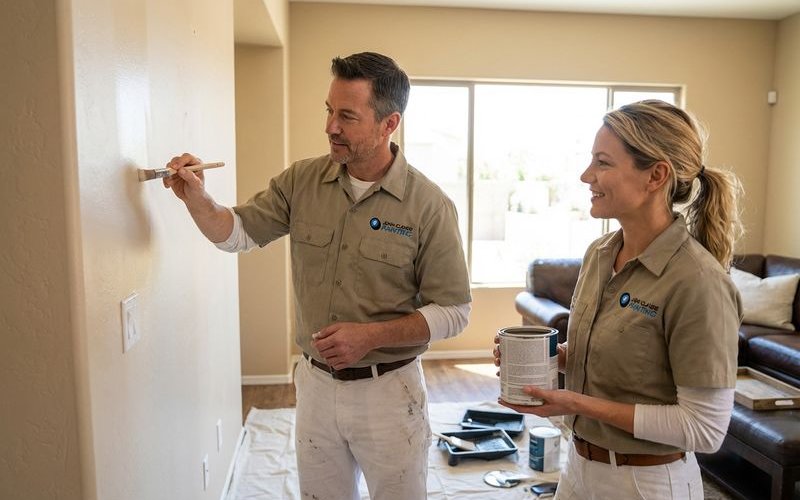
Touch-Up vs. Complete Repaint
Deciding between a quick fix and a full project often comes down to the condition of your leftover paint.
The “Garage Storage” Problem
Critical Warning: Do not use old paint that has been stored in your garage. Arizona garage temperatures can exceed 120°F, which cooks the chemical binders in latex paint. This turns the paint into a rubbery gel or separates the pigment, making it unusable and likely to peel if applied.
When to Touch Up
- The damage is smaller than a dime (nicks/scratches).
- You have the original paint stored indoors in a climate-controlled closet.
- The wall was painted less than 2 years ago (fading hasn’t set in).
When to Repaint Fully
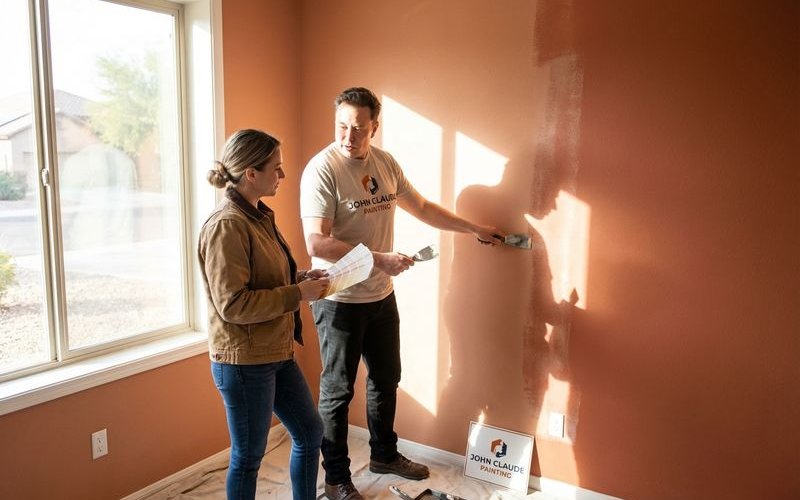
- Corner-to-Corner Method: If a touch-up stands out, we recommend repainting just that single wall from corner to corner.
- Texture Matching: Large patches on knockdown texture are nearly impossible to blend perfectly without re-rolling the whole section.
- Changed Sheen: Old paint on the wall has dulled; fresh paint from the can will be shinier, creating a visible “flashing” spot.
Room-by-Room Maintenance Schedule
Keeping a home fresh requires a proactive approach rather than reacting to failure.
Annually
- Inspect baseboards for dust buildup and vacuum them to prevent gray lines.
- Check bathroom ceilings for any signs of moisture spotting above the shower.
- Examine window sills for sun damage or peeling.
Every 3 Years
- Clean high-traffic walls (hallways/kitchens) with a mild detergent solution.
- Check for settling cracks above door frames that might need caulking.
- Evaluate if the builder-grade flat paint in the main areas is still holding up.
Every 5-7 Years
- Plan for a full repaint of high-traffic zones.
- Update colors to match current design trends (replacing beige with greige or warm whites).
- Assess the condition of trim and doors, which often yellow faster than walls.
Cost of Waiting Too Long
Ignoring worn paint often leads to more expensive prep work later.
Increased Labor Costs
Painters charge significantly more if they have to repair damaged drywall. Peeling paint must be scraped, sanded, and primed before new paint can be applied, doubling the labor time compared to a simple “re-coat.”
Substrate Damage
Exposed drywall absorbs moisture and odors. In kitchens, grease that penetrates unpainted drywall is incredibly difficult to seal, often requiring expensive oil-based primers to block the stains.
Value Perception
A home with scuffed, faded walls feels older and less valuable. Whether you are hosting guests or preparing to sell, fresh paint offers one of the highest returns on investment (ROI) of any home improvement project.
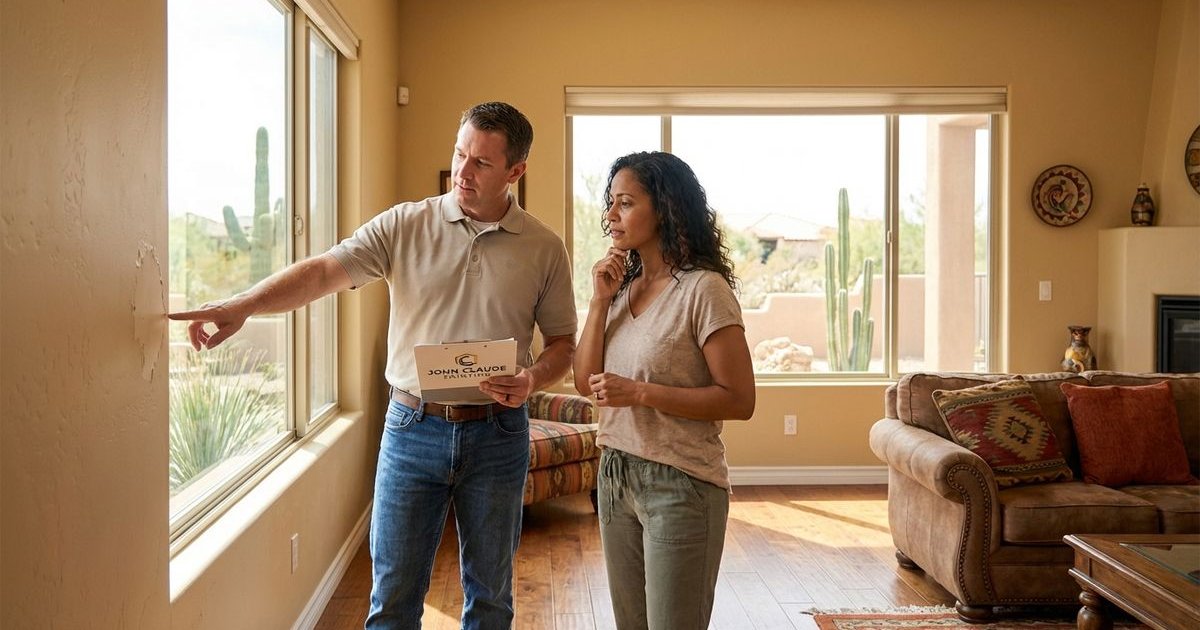
Professional Assessment
Understanding the scope of your project helps you budget effectively.
What We Evaluate
- Square Footage: Accurate measurements of wall surface area (excluding windows/doors).
- Texture Condition: Assessing if drywall repairs are needed for cracks or holes.
- Furniture Moving: Determining if heavy items need to be moved or protected.
2026 Cost Expectations
Current market rates in the Phoenix metro area typically range from $2.50 to $5.00 per square foot of floor space for a standard interior repaint. This variance depends heavily on ceiling height, the number of colors used, and whether you choose premium paints like Dunn-Edwards Evershield or standard builder grades.
Ready for Fresh Paint?
If your walls are showing the effects of our desert climate, it is time to bring the life back into your home. At John Claude Painting, we specialize in high-quality, long-lasting finishes designed specifically for Arizona homes.
Call us at 602-572-1234 or request a free estimate to evaluate your home’s interior painting needs. We serve Phoenix, Chandler, Gilbert, Mesa, Tempe, and the East Valley.
Not sure if you need to repaint? Contact us for a free assessment. We’ll give you an honest evaluation and help you plan your painting project timeline.