
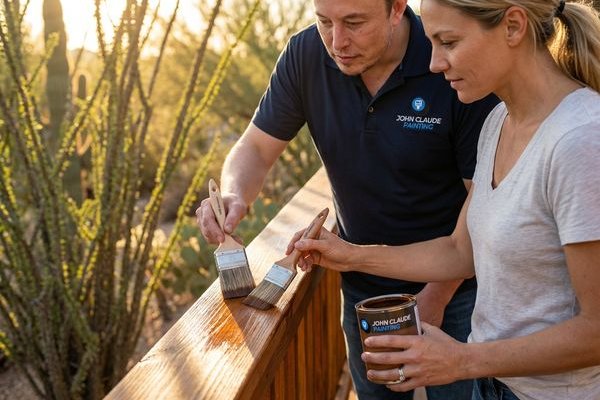
Protect Your Outdoor Wood from Arizona’s Brutal Sun
Arizona’s desert climate is uniquely harsh on outdoor wood. Decks, fences, pergolas, and other wood structures face extreme UV radiation, temperatures exceeding 115°F, dramatic humidity swings during monsoon season, and relentless sun exposure. Without proper protection, wood quickly turns gray, cracks, splits, and deteriorates.
At John Claude Painting, we specialize in restoring and protecting outdoor wood throughout the Phoenix Valley. Using professional-grade stains and sealers specifically formulated for desert conditions, we help your wood structures look beautiful and last longer.
Why Wood Needs Extra Protection in Arizona
UV Radiation
Phoenix receives among the highest UV radiation levels in the United States. This intense sunlight:
- Breaks down wood lignin (the natural binder)
- Causes graying and discoloration
- Leads to surface checking and cracking
- Degrades existing finishes rapidly
Extreme Heat
Summer temperatures routinely exceed 110°F, with surface temperatures on exposed wood reaching 150°F+:
- Wood expands significantly in heat
- Rapid temperature changes stress finish films
- Heat accelerates finish breakdown
- Stored heat affects adhesion of new products
Monsoon Moisture
The summer monsoon season brings sudden moisture:
- Wood absorbs water rapidly after dry periods
- Expansion causes finish cracking
- Standing water leads to mold and mildew
- Wet-dry cycling stresses wood fibers
Low Winter Humidity
Arizona’s low humidity during much of the year:
- Causes wood to dry out and shrink
- Creates checks and cracks
- Opens gaps in boards
- Makes wood more vulnerable to damage
Wood Structures We Stain and Seal
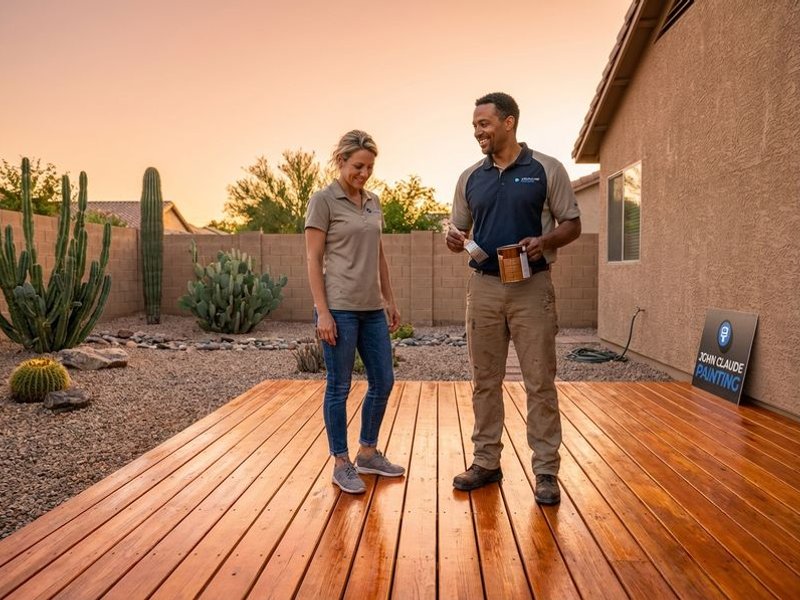
Decks and Patios
Wood decks are popular but demanding in Arizona:
- Horizontal surfaces get maximum sun exposure
- Foot traffic wears finishes faster
- Furniture can trap moisture and scratch
- Need frequent maintenance (every 2-3 years)
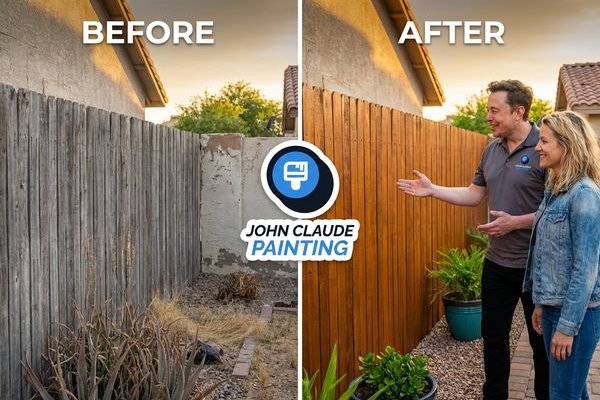
Fences
Wood fences define property lines but suffer:
- West-facing sections get afternoon sun beating
- Ground contact can cause rot
- Height makes thorough coverage challenging
- Typically need refinishing every 3-4 years
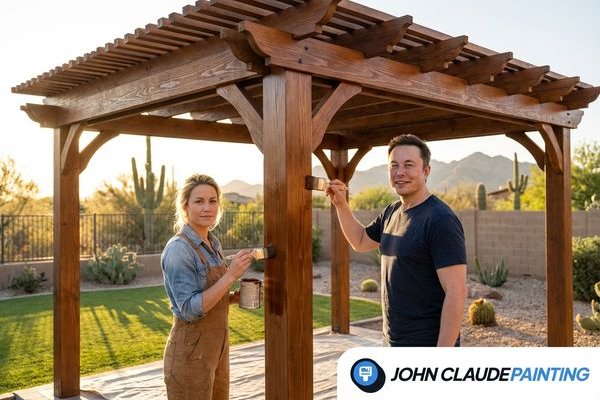
Pergolas and Ramadas
Popular outdoor living structures require attention:
- Open construction means all surfaces exposed
- Overhead position gets intense sun
- Shade they provide is lost when wood deteriorates
- Refinish every 3-5 years depending on exposure
Gates and Arbors
Architectural wood elements need care:
- High visibility makes condition obvious
- Operational use creates wear points
- Often overlooked during maintenance
- Enhance curb appeal when maintained
Play Structures
Children’s wood play sets require safe finishes:
- Non-toxic products essential
- Heavy use demands durability
- Splinter prevention important
- Proper maintenance extends life
Our Wood Staining Process
Step 1: Assessment and Planning
Every project begins with thorough evaluation:
- Current condition: How damaged is the wood?
- Previous finishes: What’s been applied before?
- Wood type: Different species need different approaches
- Exposure: How much sun, moisture does it receive?
- Your goals: Color preference, finish type, budget
Step 2: Surface Preparation
Proper prep is crucial for adhesion and penetration:
Power Washing:
- Removes dirt, mildew, and debris
- Opens wood grain for stain penetration
- Strips loose finish material
- Requires proper technique to avoid damage
Sanding (when needed):
- Removes gray, damaged wood fibers
- Smooths raised grain from washing
- Prepares surface for even absorption
- Creates better finish adhesion
Drying Time:
- Wood must dry completely (usually 24-48 hours)
- Moisture meter readings guide timing
- Rushing this step causes failure
Step 3: Repairs
Addressing structural issues before staining:
- Replace damaged boards
- Tighten loose fasteners
- Address popped nails
- Fix structural concerns
Step 4: Stain Application
Using techniques appropriate for each structure:
Brush Application:
- Best penetration into wood
- Ideal for detailed areas
- Consistent color distribution
- Traditional method
Spray Application:
- Faster for large areas
- Even coverage on flat surfaces
- Often back-brushed for penetration
- Efficient for fences
Combination:
- Spray to apply, brush to work in
- Best of both methods
- Our preferred approach for most projects
Step 5: Sealing (When Appropriate)
Additional protection through topcoats:
- Clear UV-blocking sealers
- Water-repellent treatments
- Mildew-resistant formulas
- Extend stain life significantly
Products We Use
Stain Types
Semi-Transparent Stains:
- Shows wood grain
- Natural appearance
- Penetrates into wood
- Easiest to maintain
Semi-Solid Stains:
- More color coverage
- Partially hides grain
- Good for older wood
- Balances protection and aesthetics
Solid Stains:
- Opaque coverage
- Hides grain completely
- Best for damaged wood
- Longest protection
Key Product Characteristics
We select products with:
- High UV blockers for Arizona sun
- Mildew resistance for monsoon season
- Flexibility to handle temperature swings
- Quality resins for durability
- Professional-grade formulations
Stain Color Options
Natural Wood Tones
Popular choices that complement desert landscaping:
- Natural/Clear: Preserves wood color while protecting
- Cedar: Warm reddish-brown
- Redwood: Deep rich brown
- Honey: Light golden tone
Gray Tones
Modern looks popular in contemporary homes:
- Driftwood: Natural weathered gray
- Cape Cod: Blue-gray undertones
- Slate: Darker charcoal gray
Dark Tones
Bold statements that hide wear:
- Walnut: Rich chocolate brown
- Dark Mahogany: Deep reddish-brown
- Ebony: Nearly black
Color Matching
We can match:
- Existing wood stains on property
- Home exterior colors
- Landscape and hardscape elements
Maintaining Your Stained Wood
Annual Inspection
Look for signs of wear:
- Fading or discoloration
- Water no longer beading
- Checking or cracking
- Mold or mildew growth
Cleaning
Regular cleaning extends finish life:
- Sweep debris regularly
- Clean spills promptly
- Wash annually with appropriate cleaner
- Avoid harsh chemicals
Touch-Ups
Between full refinishing:
- Address high-wear areas
- Spot-treat sun damage
- Maintain high-traffic zones
Refinishing Schedule
| Structure | Typical Interval | Factors Affecting |
|---|---|---|
| Decks | 2-3 years | Traffic, sun exposure |
| Fences | 3-4 years | Direction facing, irrigation |
| Pergolas | 3-5 years | Coverage, orientation |
| Railings | 2-3 years | Hand contact, sun |
Why Choose Professional Staining
DIY Challenges
Staining looks simple but often disappoints:
- Poor prep leads to peeling and failure
- Wrong products don’t survive Arizona conditions
- Uneven application creates blotchy appearance
- Missed areas weather quickly
- Time investment often underestimated
Professional Advantages
- Proper preparation for lasting results
- Quality products selected for Arizona
- Expert application techniques
- Efficient completion of large areas
- Guaranteed satisfaction
Ready to Restore Your Outdoor Wood?
Don’t let Arizona’s sun destroy your wood structures. Professional staining and sealing from John Claude Painting protects your investment and keeps your outdoor spaces beautiful.
Call us at 602-572-1234 or request a free estimate to schedule an assessment of your decks, fences, pergolas, or other wood structures.